Know your numbers. Build your day.
A calorie estimate. Everyday meals. A simple place to start.
Your next step
starts here.
Enter your details to see your calorie target, protein guide and a flexible day of meals.
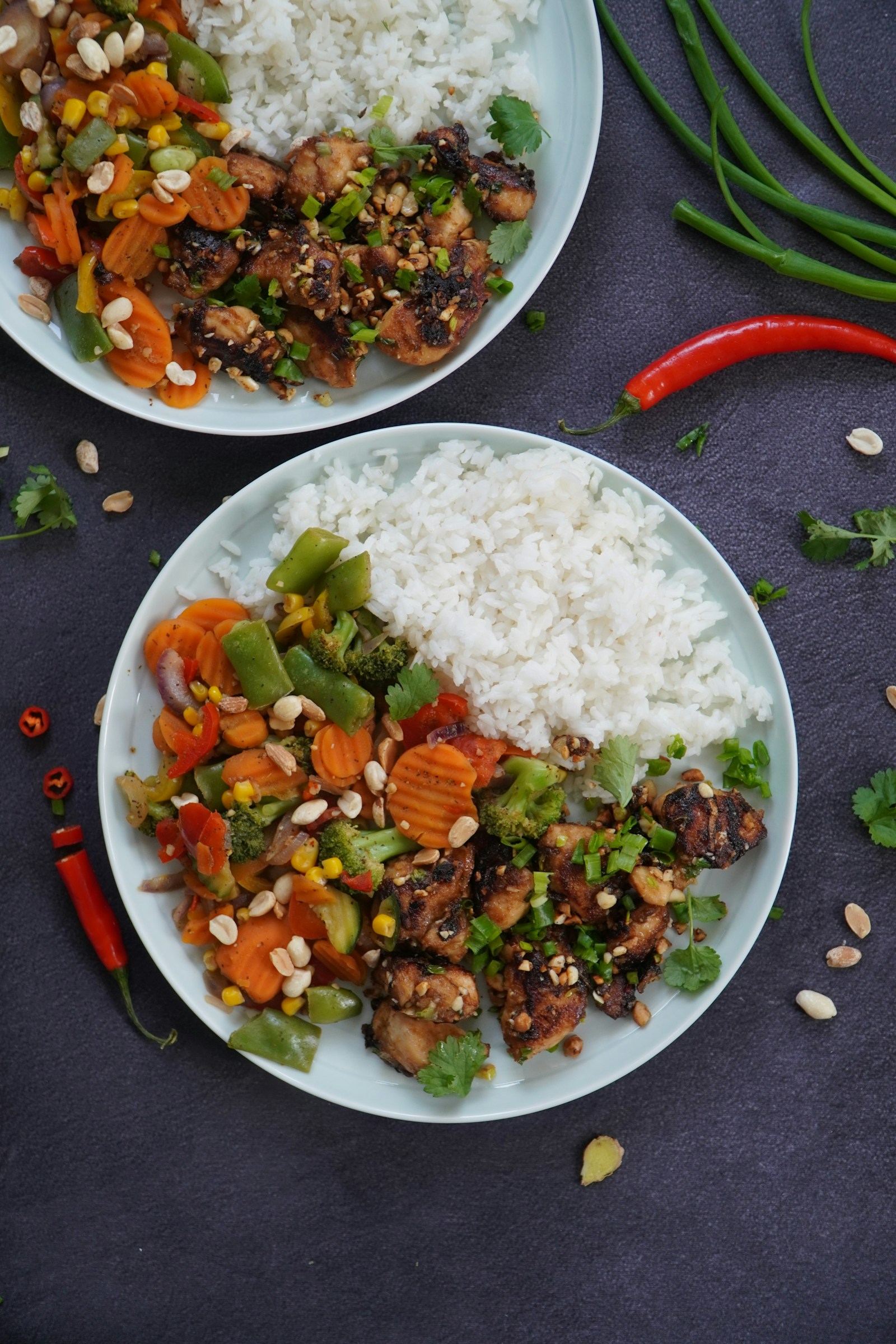
Food inspiration · your portions will depend on your target.
DOMINATE · Your nutrition starting point
Your flexible sample day
Pick a meal in each slot. Portions are matched to your calories; the actual meal-plan macros are shown below.
Weights are raw or dry unless stated. Nutrition is approximate; check your brand’s labels. Include any extra oils, sauces and drinks.
How are my numbers calculated?
We use the Mifflin–St Jeor equation to estimate resting energy needs, then multiply by your selected activity level. Fat loss starts at 15% below estimated maintenance; muscle gain starts at 10% above. These are starting assumptions, not measured energy needs.
Rikki’s protein target is 2.2g per kg of body weight, capped at 220g per day for anyone weighing 100kg or more. Below the cap, protein is rounded up to the nearest gram. Fat is around 30% of calories; carbohydrate makes up the remainder. Macro targets are rounded, so calorie totals may differ slightly.
How do I use the meal plan?
Choose a breakfast, lunch, dinner and snack you enjoy. The planner scales ingredient quantities to your calorie estimate and recalculates totals when you swap. It matches calories, not every macro exactly. Use the protein target as a guide when adapting your meals.
This is an illustrative day, not a complete long-term diet. Vary foods across the week. Check ingredient labels for allergens: options include milk, oats, wheat, peanuts, soy, fish and eggs. Meal swaps are not allergy-safe substitutions.
What should I do after getting my target?
Start consistently and review your average weight trend, hunger, energy and training over 2–3 weeks. Daily weight moves around. Your actual maintenance may differ from this estimate, so use your progress to guide future adjustments.
Is this calculator suitable for me?
This general tool is for adults aged 18–80. It won’t create a plan below 1,400 or above 4,000 calories, or for someone whose BMI is below 18.5. These are limits of this tool, not personal safety thresholds.
If you’re pregnant, breastfeeding, managing a condition that affects nutrition or recovering from an eating disorder, get individual guidance from a qualified clinician or dietitian.